In brief
- Pulse direction: LONG, SHORT or NEUTRAL.
- Indicators used: RSI, Stochastic RSI, MACD, ADX, ATR, Volume Spike.
- Each pulse has a score and a confidence.
- Each pulse goes through an AI Review: STRONG_BUY, APPROVED, CAUTION, RISKY, REJECTED, ADJUSTED.
- A Guardian Score (0-100) measures the overall quality of the signal.
In depth
What a Pulse is
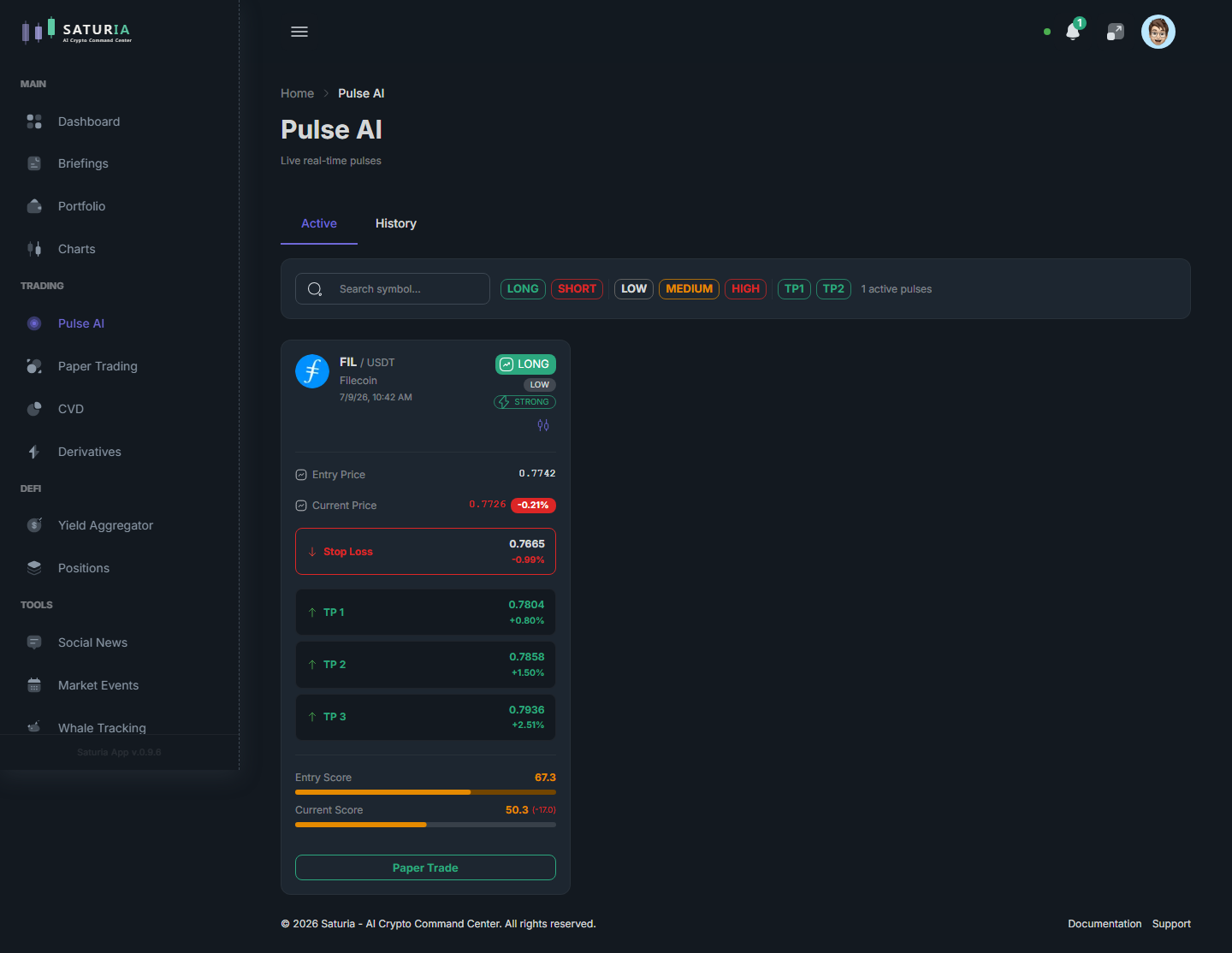
A pulse is the output of a technical-analysis engine that watches a set of indicators on monitored assets in real time. When the combination of readings indicates an actionable configuration, the engine emits a pulse. The pulse contains a suggested direction, levels (entry, stop, target when available) and a set of quality metadata.
Pulse structure
Each pulse carries:
- Direction (
pulseType) — LONG, SHORT or NEUTRAL. "Neutral" means the engine saw a relevant setup but without clear directional bias. - Score — a numerical measure of configuration strength.
- Confidence — how confident the engine is in the identified setup.
- Underlying indicators — the current RSI, StochRSI, MACD, ADX, ATR and Volume Spike values that contributed to the signal.
AI Review status
After emission, a pulse goes through an automated review phase that assigns one of these statuses:
- STRONG_BUY — strong signal, very favorable configuration.
- APPROVED — valid signal, promoted.
- CAUTION — valid signal but with caveats, handle with care.
- RISKY — borderline signal, high risk.
- REJECTED — review discarded the signal.
- ADJUSTED — the signal was modified (e.g. levels moved).
This review layer is a quality control meant to prevent every indicator spike from becoming a signal. Not every pulse you see is worth acting on: always read the review status.
Guardian Score
The Guardian Score (0-100) is a synthetic evaluation that weighs the pulse configuration against market context. It's an aggregated quality indicator. A high Guardian Score means the signal is consistent with context; a low one suggests caution.
Indicators used by the engine
The Pulse engine runs on the same indicators visible in the Chart module. This is deliberate: we want you to be able to visually verify what a signal is based on, with no black boxes.
- RSI — overbought/oversold readings.
- Stochastic RSI — a more sensitive RSI variant.
- MACD — crossovers and divergences.
- ADX — current trend strength.
- ATR — volatility for stop/target placement.
- Volume Spike — anomalous volume spikes confirming the move.
How to use them
Three practical rules:
- Don't trade REJECTED or RISKY pulses without your own solid analysis. AI review exists for a reason.
- Verify context. Open the Chart on the pulse asset, look at structure, compare timeframes.
- Manage risk. Even a Guardian Score 100 pulse can be wrong. Always use sensible stop loss and position sizing.
Where you see them
- On the Pulse AI page with filters and history.
- As a dashboard widget (latest top pulses).
- As notifications if you've enabled the pulse alerts channel.
What a pulse is NOT
- Not a financial recommendation.
- Not a certain forecast.
- It doesn't consider your personal risk profile, liquidity, or overall exposure.
The pulse is a support tool. The decision is always yours.